
Choose the footprint before the decorations
Axolotl Tank Size Guide
My practical guide to choosing a tank that gives your axie enough floor space, stable water, useful hides, and room for the equipment you actually need.
A bigger uncycled tank is still unsafe
Choose the aquarium before bringing an axolotl home, complete a fishless cycle, and prove that the biofilter can process the expected waste. Extra gallons add a buffer; they do not make ammonia or nitrite harmless.
The quick-and-dirty answer
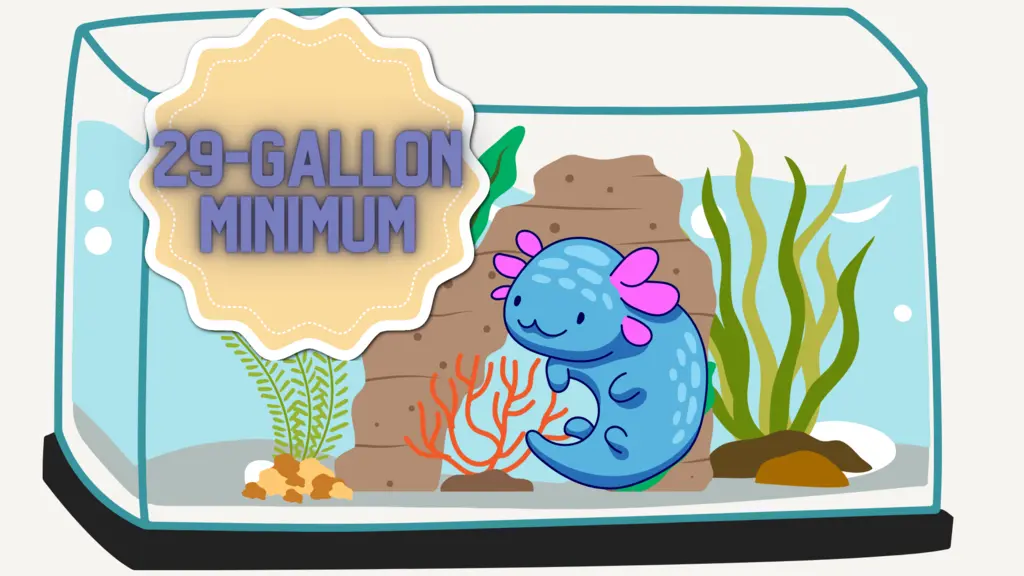
For one adult, I would not go smaller than 29 gallons
That is the practical minimum I use on Axolotl Authority - not a universal number agreed on by every care sheet. LafeberVet lists 20+ gallons for a mature adult, while OATA emphasizes large, long, wide aquariums and at least 100 litres for a small group. My more conservative recommendation leaves extra room for a hide, filtration, maintenance, and the waste load of a full-grown axolotl.
Why I often say “get the 40”
A 40-gallon breeder is easier to arrange
Trust me on this: if your space, floor, stand, budget, and cooling plan support it, the wider footprint is usually worth it. You get more room around a full-size hide, a clearer feeding area, and a larger water-volume buffer while you build good maintenance habits.
It does not mean fewer checks. I still test, siphon waste, and change water based on the aquarium’s actual results.
Gallons do not tell the whole story
Choose long and wide before tall and narrow
Axolotls spend much of their time on or near the bottom. Two aquariums can hold a similar volume but provide very different usable floor space once you add a hide, filter intake, plants, and feeding dish.
I look for an adult that can walk, turn, and pass its hide without scraping gills or being forced into the filter current. Extra height can add water volume, but it does not replace a useful footprint.
Compare the base dimensions of the exact tank model.
Allow for decor, substrate, equipment, and fill height.
Fit a dark hide, feeding space, gentle flow, and a maintenance path.
Do not buy from the gallon label alone. A “29,” “40,” or “60” describes nominal capacity. Verify the manufacturer’s dimensions and measure the space in your home before choosing.
The aquarium is life-support equipment
Why tank size affects more than swimming room
A suitable aquarium gives the whole care system enough room to work. Size supports stability, but the result still depends on filtration, temperature, water changes, stocking, and how easy the tank is for you to clean.
Water quality
Axolotls produce a meaningful waste load. More water can dilute changes and buy a little response time, but it never replaces cycling, testing, waste removal, or partial water changes.
Usable floor space
A long, wide tank leaves room for walking, turning, feeding, and resting without forcing the axolotl to squeeze around hides and equipment.
Temperature stability
A larger water volume generally changes temperature more slowly. You still need a cooling plan that works during the warmest part of the year.
Choice and cover
Enough space lets you provide dark hides, shaded areas, open floor, and calm zones without turning the aquarium into an obstacle course.
Start with one when you are learning
Multiple axolotls need space - and a separation plan
I still recommend that a first-time keeper begin with one axolotl. Adding another animal adds waste, feeding competition, nipping risk, and the possibility that you will need two complete setups on short notice.
If you keep two, choose similar-sized adults, provide more than one roomy hide and feeding area, and do not mix sexes unless you are prepared and qualified to manage breeding. Watch the animals themselves: persistent chasing, injury, weight loss, or one individual monopolizing food means the arrangement is not working.
Use the complete tankmates guide to plan quarantine, introductions, and warning signs.
Measure twice, buy once
My tank-buying checklist
The best tank is not simply the largest glass box you can find. It is one your home can safely support and you can reliably cool, clean, cover, and maintain.
Measure the footprint
Write down the tank’s length and width, not only its advertised gallons. Manufacturer dimensions vary, so verify the exact model before buying a stand or lid.
Subtract what takes up space
Substrate, rocks, hides, equipment, and a lowered fill line reduce actual water volume. Nominal tank capacity is only a starting point.
Plan the full weight
Water alone weighs about 8.34 pounds per U.S. gallon. A 29-gallon tank holds roughly 242 pounds of water and a 40-gallon holds about 334 pounds - before glass, substrate, decor, or equipment.
Leave maintenance access
Make sure you can remove the lid, siphon every corner, service the filter, and lift hides without fighting a shelf or wall.
Fit the cooling and filter plan
Allow space for gentle filtration, a spray bar or baffled return, fans or a chiller if needed, and safe drip loops for every power cord.
Use a secure cover
Axolotls can escape. Choose a fitted lid or mesh cover that works with hoses and cables without leaving dangerous gaps.
Check the stand and floor. The USGS uses about 8.34 pounds per gallon for water. Add the aquarium, stand, substrate, rocks, lid, and equipment, then follow the tank and stand manufacturers’ support instructions. Ask a qualified building professional when floor capacity is uncertain.
New, local, or secondhand
Where I look for an aquarium
I prefer supporting a good local aquarium shop when I can. Big-box stores can still be useful when they run aquarium sales, and secondhand tanks can be excellent value if you inspect them carefully. Before deciding, use the ownership budget guide to price the lid, stand, filtration, cooling, and testing supplies with the tank.
Ask about footprint and support
A knowledgeable shop can help match the exact tank, lid, stand, and filter layout - and may offer local delivery.
Compare the complete cost
Check the current 40-gallon aquarium listing at Petco, then price the fitted lid and proper stand before deciding.
Marketplace and Craigslist
I personally love this option. Inspect every seam, chip, brace, and panel in person, ask what the tank held, and leak-test it somewhere a failure cannot cause damage.
A used tank deserves a dry run
Inspect and leak-test before it enters the room
Look closely for chips that reach an edge, cracks, damaged braces, lifted or missing silicone, and a stand that does not support the aquarium as its manufacturer requires. Cosmetic mineral deposits are different from structural damage.
Do not reseal only the visible spot and assume the aquarium is safe. If the structural condition is uncertain, pass on the deal or have the tank assessed by someone qualified to repair aquariums.
- 1Inspect emptyUse bright light to check every panel, seam, brace, rim, and corner.
- 2Clean aquarium-safelyAvoid household soaps and cleaners that can leave residue.
- 3Fill in a safe locationUse level, manufacturer-approved support and monitor the tank through a complete leak test.
- 4Cycle from the beginningA leak-free used tank is not automatically biologically ready for an axolotl.
The glass box is only step one
Build the life-support system around the tank
Once you know the size and footprint, plan every major piece before the axolotl comes home. I would rather find out on paper that a hide blocks the filter intake than discover it while an animal is waiting.
Common questions
Axolotl tank size FAQ
Can one adult axolotl live permanently in a 20-gallon tank?
Some published veterinary guidance lists 20+ gallons for a mature adult, but I recommend no smaller than 29 gallons and prefer a 40-gallon breeder for beginners. The extra usable space makes it easier to fit a full-size hide, gentle filtration, and a clear maintenance path.
Is a tall aquarium bad for an axolotl?
Height is not automatically harmful, and extra water volume can be useful. The problem is choosing height instead of floor space. Compare length and width first, then make sure the complete aquarium remains easy to cool, filter, cover, and clean.
Will a bigger tank mean I can change water less often?
Not by schedule alone. More water can slow concentration changes, but water-change needs depend on test results, waste, feeding, filtration, plant growth, source water, and stocking. Keep testing and adjust maintenance to the aquarium you actually have.
Can I divide one tank for two axolotls?
A divider does not create more water volume, and waste and pathogens may still move through shared water. It can also reduce usable floor space and create flow or entrapment problems. A separate cycled setup is the safer backup when animals need separation.
Do I need a 60- or 75-gallon tank for two adults?
I use that range as a conservative planning point, not a universal formula. Compare the real footprint, actual water volume, animal size, hide and feeding zones, filtration, maintenance capacity, and each axolotl’s behavior. Be prepared to separate them even when the numbers look generous.
Can I put an aquarium on regular furniture?
Only if the furniture and floor are designed and confirmed for the complete aquarium load and the tank is supported exactly as its manufacturer requires. Water alone is heavy, and damage from a failed stand or uneven support can be severe.
Sources and further reading
- LafeberVet: Basic Information Sheet - Axolotl
- LafeberVet: Care of the Axolotl
- OATA: How to Look After Axolotls and Aquatic Frogs
- U.S. Geological Survey: A Million Gallons of Water - How Much Is It?
This independently written guide separates published husbandry guidance from Pat’s more conservative keeper recommendations. Tank dimensions and product specifications vary; verify the current manufacturer information for the exact aquarium, stand, lid, and equipment you choose.