
Low-light greenery for a cool aquarium
10 Aquarium Plants for Axolotl Tanks
Plants can add shade, cover, and a more natural look, but they still have to work with cool water, gentle lighting, safe substrate, and an axolotl that may rearrange everything.
Two commonly sold aquarium plants are prohibited in Wisconsin
Water lettuce and Egeria densa are both listed as prohibited by the Wisconsin DNR. Common names can be confusing, so check the scientific name and your own state rules before buying or trading any aquatic plant.
My honest starting point
Start with plants that do not need a bright aquascape
When I add plants to an axolotl tank, I am not trying to build a high-tech planted aquarium. My first priority is still the axolotl. I want cool, clean water, open floor space, gentle light, and places where the animal can get completely out of that light.
That is why I keep coming back to Anubias, Java fern, and Java moss. They can be attached to movable decor, tolerate subdued lighting, and do not require a nutrient-rich substrate. Pothos can also be useful when only its roots are in the water.
A plant has to fit the whole system
Check these five things before bringing it home
Cold tolerance
A plant that only looks good in warm tropical water is a poor match, even if it is sold as beginner friendly.
Light needs
Choose plants that can live under the gentle schedule your axolotl can comfortably escape.
How it grows
Rhizome plants attach to decor, rooted plants need a suitable base, and floaters need calm surface space.
Local rules
Common names are unreliable. Verify the scientific name and check state invasive-species rules before ordering.
What came with it
Inspect for snails, eggs, decaying leaves, sharp weights, fertilizer pellets, and unknown treatment residues.
Ten plants and their practical tradeoffs
Which plants actually fit an axolotl tank?
Check the law first
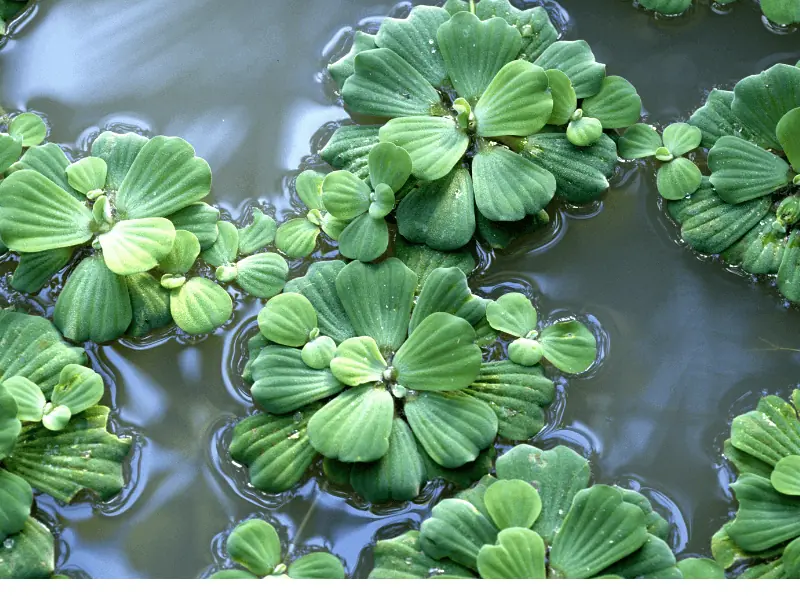
Water lettuce
Pistia stratiotes
The dangling roots and broad leaves can create shade, but this plant is invasive and regulated in many places. It is classified as prohibited in Wisconsin, so it is not an option for my local readers or for me.
Do not buy, transport, or keep it where prohibited. Never release aquarium plants outdoors, even if a species is legal where you live.
Good floating option with caveats
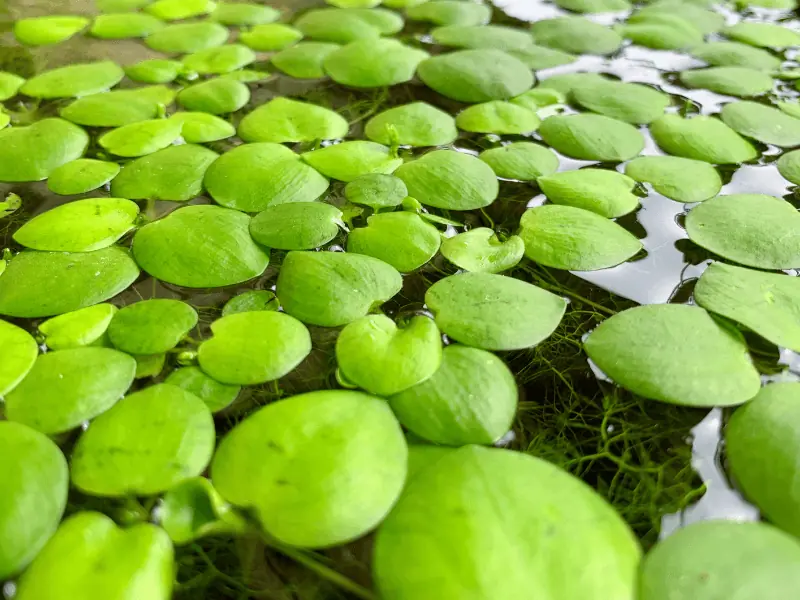
Amazon frogbit
Limnobium laevigatum
Amazon frogbit can soften overhead light and send attractive roots into the water. It may struggle beneath a wet aquarium lid or in strong surface flow, so keep some calm open water around it.
Confirm the scientific name and local rules before buying. Thin it regularly so it does not cover the entire surface or block gas exchange.
Pretty, but more demanding
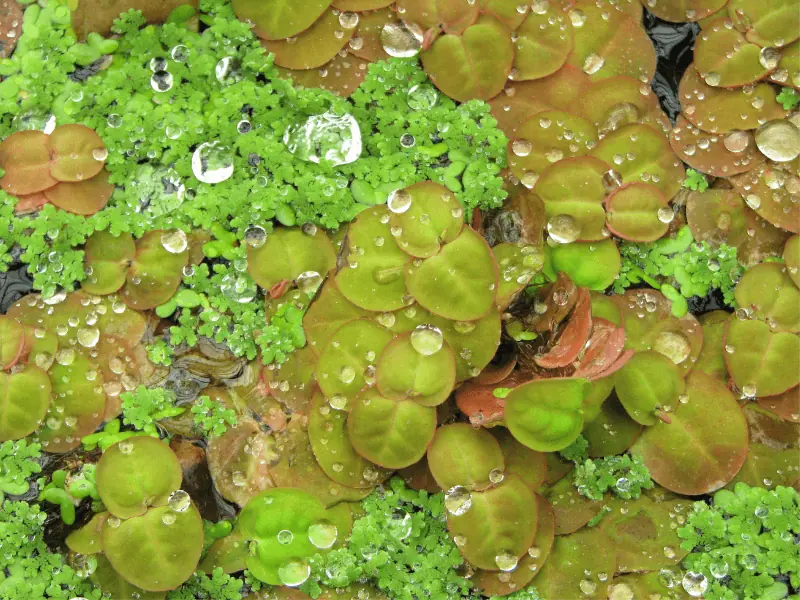
Red root floaters
Phyllanthus fluitans
These floaters add color and shade, but the strongest red tones usually need more light than I want shining directly into an axolotl tank. They can stay greener under a gentler schedule.
Use a planted area or floating ring instead of turning the whole tank into a bright display. Keep at least part of the surface open.
One of my easiest recommendations
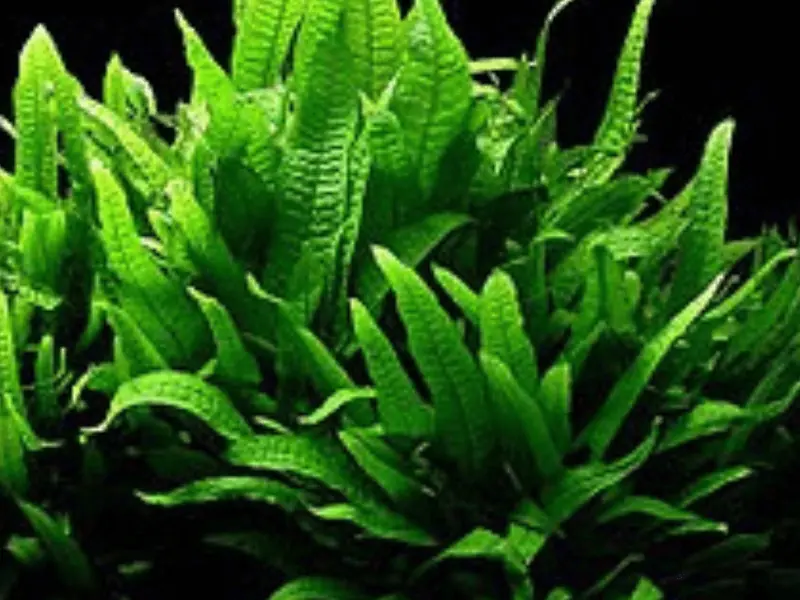
Java fern
Microsorum pteropus
Java fern is hardy, handles subdued light, and does not need nutrient-rich substrate. That combination makes it one of the easiest plants to work into an axolotl setup.
Attach it to smooth wood or stone with aquarium-safe gel glue or thread. Keep the horizontal rhizome above the substrate so it does not rot.
Best for a planted sand area
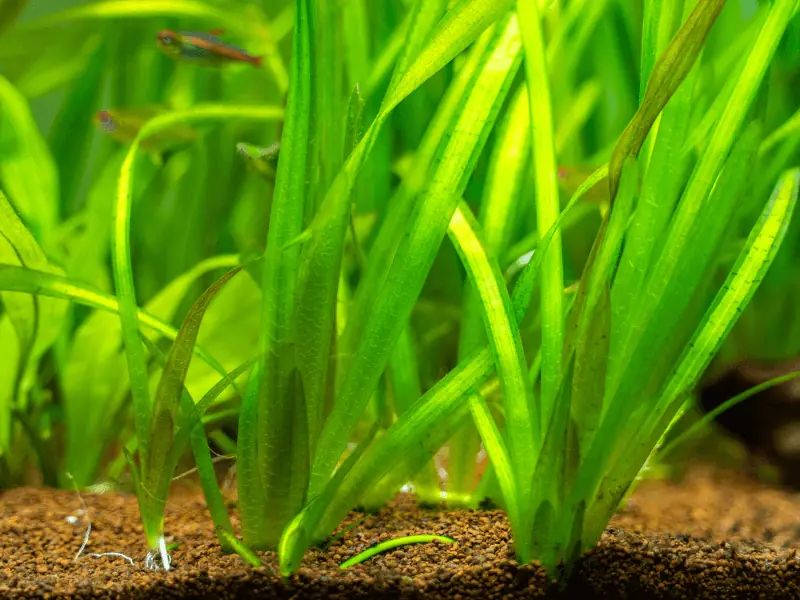
Vallisneria
Vallisneria species
Vallisneria gives the back of the tank a tall grassy look and can spread by runners. The tradeoff is that it wants its roots in substrate, and an axolotl may bulldoze new plants before they settle in.
Plant the roots in fine aquarium sand without burying the crown. A smooth pot can protect the roots in an otherwise bare-bottom tank.
Flexible and fast growing
Guppy grass
Najas guadalupensis
Guppy grass can float or grow as a loose background plant. It creates cover without needing aquasoil, although fast growth means you will need to remove extra stems before they crowd the tank.
Keep loose strands away from the filter intake and make sure the axolotl still has plenty of open floor space for walking and feeding.
Verify the species and local law
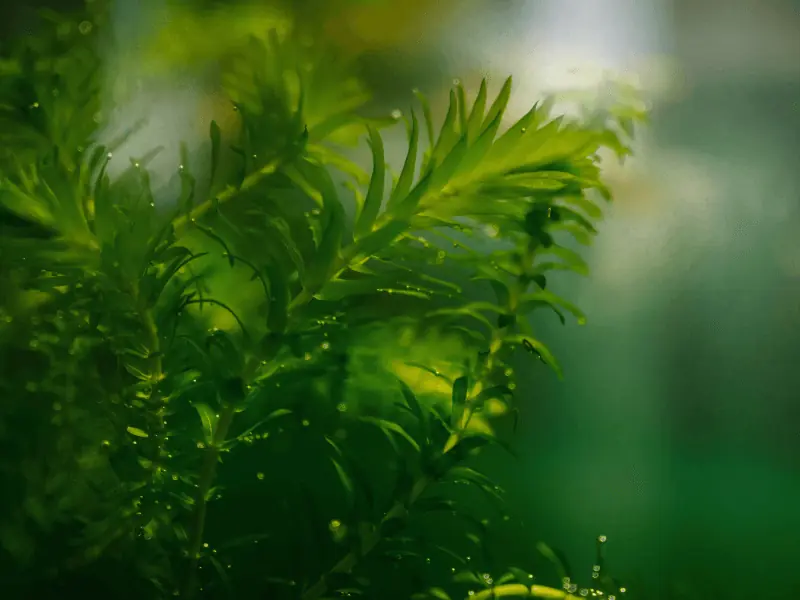
Anacharis or Brazilian waterweed
Often sold as Egeria densa
The name anacharis is used loosely in stores. Egeria densa is a fast-growing aquarium plant, but it is classified as prohibited in Wisconsin and regulated elsewhere. A label that only says anacharis is not enough information.
Ask for the scientific name before purchasing. Do not substitute a lookalike until you have checked your state rules and confirmed that the plant fits a cool aquarium.
Good for soft texture and cover
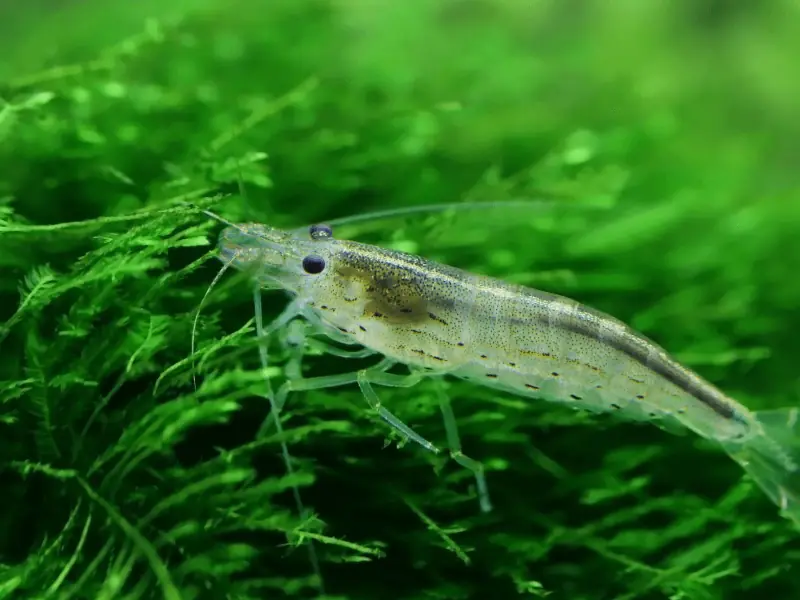
Java moss
Taxiphyllum barbieri and related mosses
Java moss tolerates lower light and can be attached to decor instead of planted. It grows slowly in some cool tanks, but that is not a dealbreaker when you want a simple, natural-looking accent.
Tie or glue small portions to smooth decor. Trim loose growth so food and waste do not disappear into a thick mat.
My top low-light choice
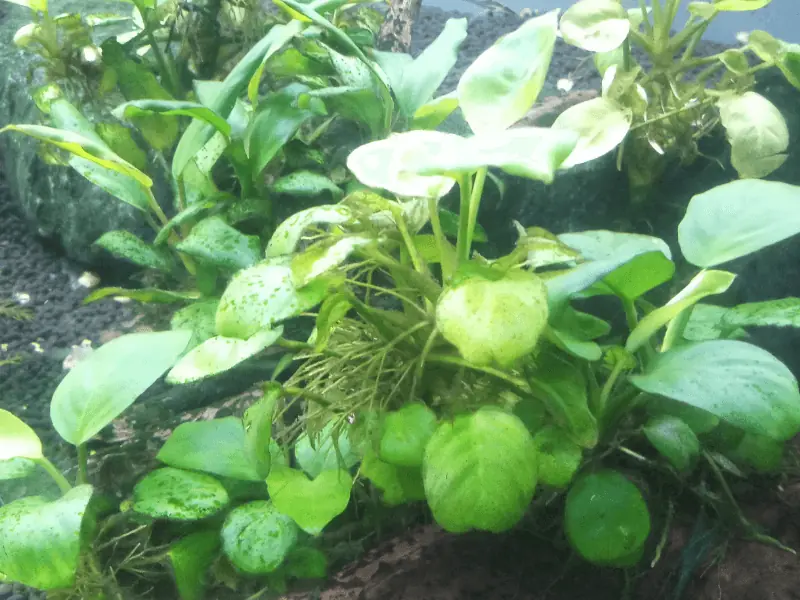
Anubias
Anubias species
If I had to give a beginner one plant to try first, Anubias would be near the top of my list. The sturdy leaves tolerate gentle lighting, and there are enough varieties to fit almost any tank layout.
Attach it to smooth wood, stone, or a movable decoration. Leave the rhizome uncovered and wipe algae from older leaves when needed.
Roots in, leaves out
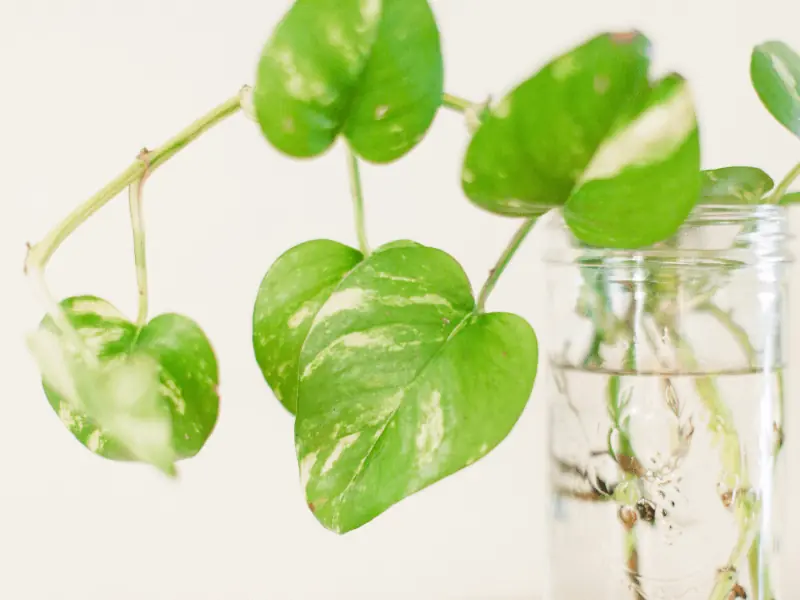
Pothos
Epipremnum aureum
Pothos is a houseplant rather than a fully aquatic plant. Its roots can grow in aquarium water while the stem and leaves remain above the surface, giving you greenery without taking over the floor.
Secure the cutting so the leaves and nodes you want to keep dry stay above the water. Prevent access by pets or children who may chew the plant, and trim roots before they crowd equipment.
Keep the setup simple and cleanable
Add aquarium plants without creating new problems
- 1Confirm the identity
Match the label to a scientific name, especially for floaters and plants sold as anacharis.
- 2Inspect and rinse
Remove damaged leaves, rock wool, metal weights, loose fertilizer pellets, and visible hitchhikers. Use conditioned water, not household soap.
- 3Isolate when practical
A separate plant container gives you time to spot snails, eggs, decay, or pests before the plant enters the axolotl tank.
- 4Anchor it correctly
Keep rhizomes exposed, protect rooted plants from digging, and secure pothos with its leaves above the water.
- 5Protect open space
Leave a clear feeding area, clear the filter intake, and keep enough bare floor for the axolotl to move comfortably.
- 6Trim and remove waste
Take out dying leaves and excess growth before they trap food or add unnecessary organic matter to the aquarium.
Do not chase plant growth at the animal’s expense
Does an axolotl tank need plant fertilizer?
I prefer plants that can manage without an aggressive fertilizer routine. That is one reason I like Anubias, Java fern, moss, and pothos. Fish waste and food do add nutrients, but that does not mean every tank automatically supplies everything every plant needs.
I would not call every aquarium fertilizer unsafe, and I would not add one casually either. Ingredients, concentrations, and directions differ. If a plant is struggling, check light, temperature, placement, damaged roots, and species compatibility before reaching for a bottle. Never add a product with unclear ingredients or use more than the label allows.
Common questions
Axolotl aquarium plant FAQ
Do live plants make an axolotl tank safer?
They can add shade and take up some nutrients while growing, but they do not make an uncycled or neglected tank safe. Keep the filter cycled, test the water, remove waste, and complete regular partial water changes.
Can plants grow in an axolotl tank without substrate?
Yes. Anubias and Java fern can attach to smooth decor, moss can grow on surfaces, guppy grass can float, pothos can grow with only its roots in the water, and rooted plants can use smooth removable pots.
Will an axolotl eat aquarium plants?
Axolotls are carnivorous and do not need plants as food, but they may bump, uproot, mouth, or rest on them while exploring and feeding. Avoid sharp plant weights, toxic terrestrial cuttings, and small hard pieces that could be swallowed.
How much light do the plants need?
Enough for the chosen species, but not so much that the axolotl cannot avoid it. Start with a modest daytime schedule, provide hides and shaded areas, and adjust based on plant growth, algae, and the animal’s behavior.
Can pothos leaves stay underwater?
No. Pothos is not a fully aquatic plant. Keep the leaves and most of the stem above the surface while the roots grow in the water. Remove any soft or decaying tissue promptly.
How should I dispose of extra aquarium plants?
Seal unwanted plants in a bag and place them in household trash according to local guidance. Do not put them in a pond, stream, storm drain, wetland, or outdoor compost pile where fragments might escape.
Sources and further reading
- OATA: How to Look After Axolotls and Aquatic Frogs
- Wisconsin DNR: Regulated Invasive Species
- Wisconsin DNR: Water Lettuce
- U.S. Fish and Wildlife Service: Water Lettuce Risk Screening
- Tropica: Java Fern
- Tropica: Anubias barteri var. nana
- Tropica: Egeria densa
This independently written guide combines current husbandry and plant references with Pat’s aquarium experience. Laws and product names can change, so readers should verify current state rules and the exact scientific name before purchasing or moving an aquatic plant.